
The 4-Step Method
The 4-Step Method is used to manage our reactions to stress-producing situations.
The 4-Step Method is the core of RI’s program and of every RI meeting. It is designed to identify and manage feelings and thoughts of anxiety, fear and anger for daily stressors (common, everyday events – not emergencies). The Method guides you to reframe stressful thoughts and replace them with behavioral techniques to help you manage your emotions and symptoms, and to drop the judgment of yourself and others. Over time and with practice, participants learn to manage daily stressors more effectively.
This cognitive-behavioral approach helps us to:
- report rather than complain;
- note our symptoms;
- check our responses;
- control our behavior;
- use the tools to change our thoughts;
- see our progress;
- praise ourselves for our efforts;
- learn simplicity instead of complexity.
Our peer-led group meetings are run by volunteers, not professionals. Here, we learn to practice this self-help Method by listening to events that work people up and offering RI tools that could apply to their situation. There are hundreds of tools or “spots” to help us manage our reactions to events that get us worked up. You will be introduced to new spots each day by signing up here.
The Parts of the 4-Step Method
Try "Spot Help" - the dog located in the bottom right corner. He will take you through a 4-Step example.
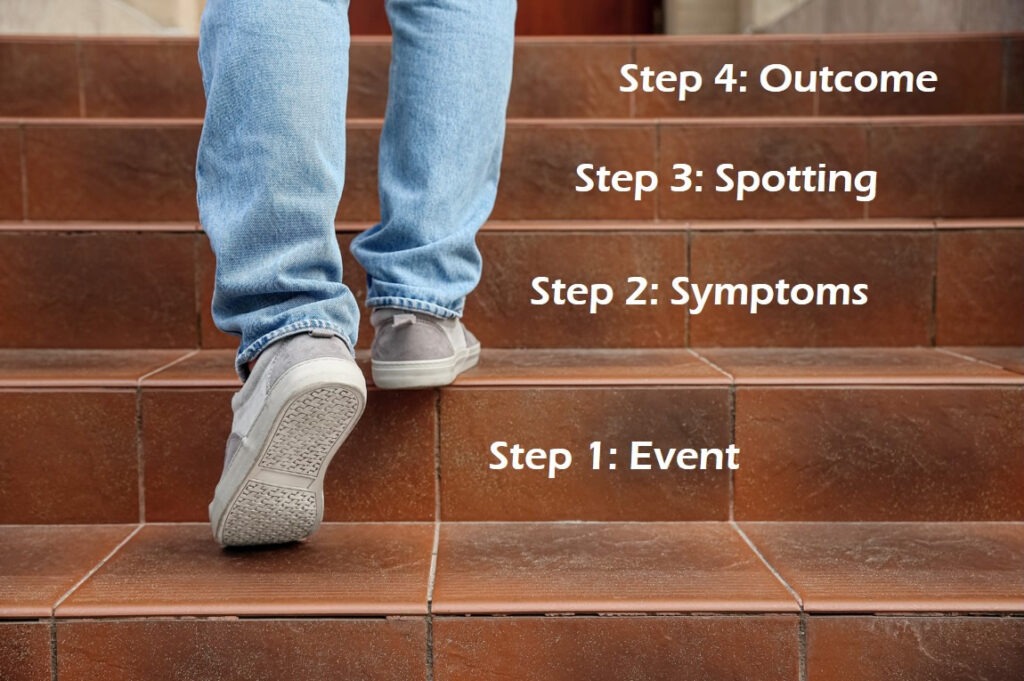
Step 1: Event That Worked You Up
Report a single situation or event that occurred – an everyday event when you began to work yourself up. Focus on a brief description of what happened: Specifically, what triggered temper and symptoms.
Step 2: Symptoms
Report the symptoms you experienced – both physical and mental. (For instance, angry and fearful thoughts, confusion, palpitations, disturbing impulses, tightness in your chest, sweaty palms, and so on.)
Step 3: Temper, Tools and Self-Endorsement
Report your spotting of fearful and angry temper, the Recovery International tools you used to help yourself, and your self‐endorsement for your effort.
Step 4: Before and After Comparisons
Begin with “Before I had my Recovery training…” and describe the temperamental reaction and symptoms you would have experienced in former days. What would have happened then versus what happened now? (This will help you to note the progress you have made.)
Join a Welcome Meeting for Newcomers
Join a Welcome Meeting for Newcomers to learn more and get started. There is no obligation to continue with the program when you attend. But this will allow you to learn more about this Method and check us out. Attend a Welcome meeting by Zoom or phone to learn the basics.
Recovery International meetings are held all over the country by Chat, Phone, Zoom, and Community (in-person). You will have to adjust these times to the time zone you reside in. On average, meetings are 90 minutes but some may be shorter.
Online Support & Fequently Asked Questions pdf
Find a Meeting Near You
In-person, Zoom, Phone, Chat, Newcomers and more.
Another way to help you get started is to order the Better Mental Health for Everyone workbook. (This is not required to attend meetings, but some people find it helpful.) You can also use this on your own.
Copyright Statement
Please note that all of Dr. Low’s writings and intellectual property are copyrighted and cannot be used for products, programs or commercial purposes without express written consent. Materials offered on this website are intended for personal use by individuals practicing the RI method, attending authorized meetings led by RI-certified leaders. They may not be used in a group setting by others. If you are interested in licensing the rights for use in a public program or clinical setting, please contact us for information about our Presenter or Affiliate programs.